

Histiry of Bihar
History of Bihar
The word 'Bihar' comes from the word 'Viharas,' which refers to a Buddhist monk’s resting place. Bihar was the centre of many influential kingdoms and was the main centre of learning for thousands of years. It is the seat of significant mythological events and tales from Ramayana. It is the birth place of prominent religions including Buddhism and Jainism. It was Bihar that sprouted the first seed of democracy. It was Bihar where first true kingdom, Maurya Empire, reigned all over the subcontinent.
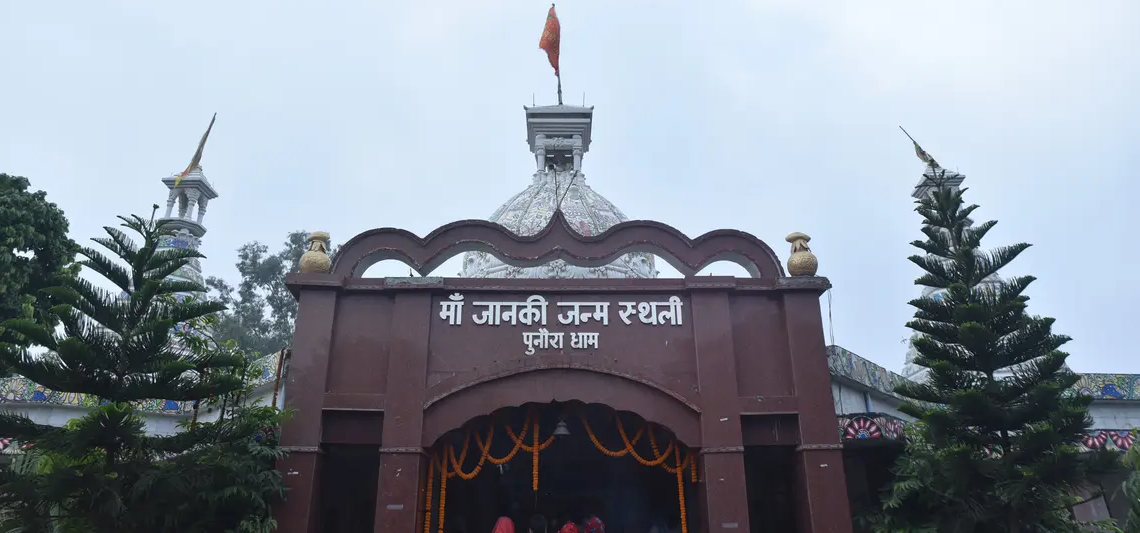
A Significant Place in Ramayana
According to mythological tales, Sita, the consort of Lord Rama, was a princess of Bihar. She was the daughter of King Janak of Videha. The present districts of Muzaffarpur, Sitamarhi, Samastipur, Madhubani and Darbhanga mark this ancient kingdom. According to legends, the birthplace of Sita is Punaura, located west of Sitamarhi town and Janakpur, the capital of King Janak and the place where Lord Rama and Sita were married. Maharishi Valmiki, author of the Hindu epic Ramayana, is also said to have lived in Bihar at Valmikinagar in West Champaran.
Ancient History of Bihar
Stone Age Sites
Palaeolithic sites have been discovered in Munger and Nalanda. Neolithic artefacts from the periods between 2500 and 1500 B.C. have been found in Chirand (Saran) and Chechar (Vaishali). Artefacts from the Chalcolithic Age have been found in Taradih, Chirand and Chechar.
The Arrival of Aryans in Bihar
In the later Vedic era, Aryans began migrating towards Eastern India (1000-600 BC). Satapatha Brahmana talked about the migration and dispersion of the Aryans. Varah Puran mentions Gaya, Punpun, and Rajgir as auspicious places, while Kikat is mentioned as an inauspicious location.
Mahajanapadas
According to Buddhist and Jaina literature, a number of small kingdoms or city-states, led by Magadha, ruled India in the sixth century. Over the Indo-Gangetic plains the Mahajanapada, a group of sixteen monarchies and republics, emerged by 500 BC. Three Mahajanapadas were in Bihar namely Magadha, Anga and Vajji.
Dynasties of Magadha
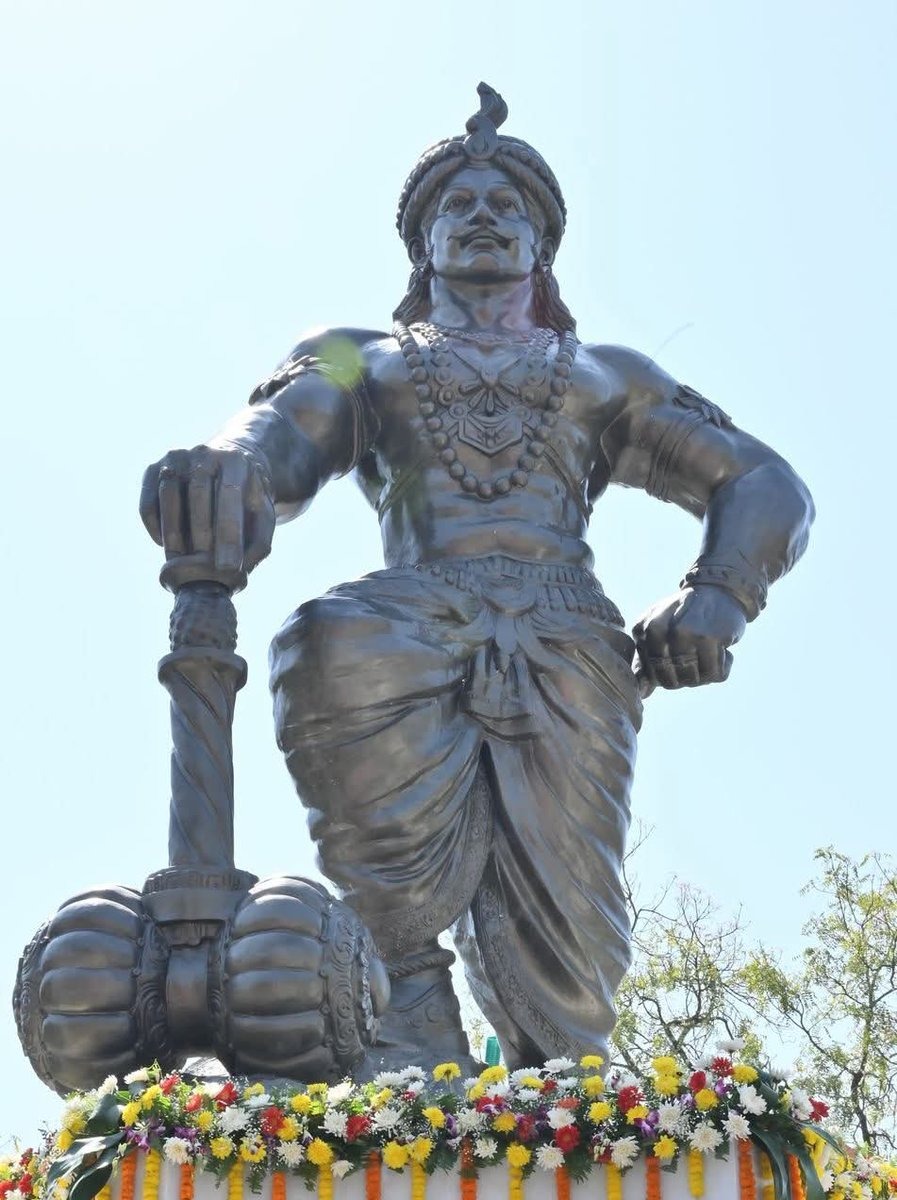
Brihadratha: The first known ruler of Magadha was Brihadrath. His son Jarasandha was the most popular king.
Haryanka Dynasty: Lasted from 544–492 BC. Founded by Bimbisara who made Rajgir his capital. Ajatshatru later founded Pataliputra and held the first Buddhist council.
Shishunaga Dynasty: Ruled from 412–344 BC with Rajgir and Vaishali as capitals.
Kalasoka: Hosted the second Buddhist Council at Vaishali in 383 BC.
Jainism in Bihar
Bihar played a major role in Jainism. Vasupujya, the 12th Tirthankara, was born in Bhagalpur. Mahavira, the 24th Tirthankara, was born in Vaishali and attained nirvana at Pawapuri, now a major pilgrimage site.
Buddhism in Bihar
Gautama Buddha attained enlightenment at Bodh Gaya. The Mahabodhi Temple is now a UNESCO World Heritage Site. Three major Buddhist councils were held in Bihar at Rajgir, Vaishali, and Pataliputra.
Mauryan Dynasty
Founded by Chandragupta Maurya with Chanakya. Ashoka later adopted Buddhism after the Kalinga war and spread it across Asia. The Third Buddhist Council was held at Pataliputra.
Medieval History of Bihar
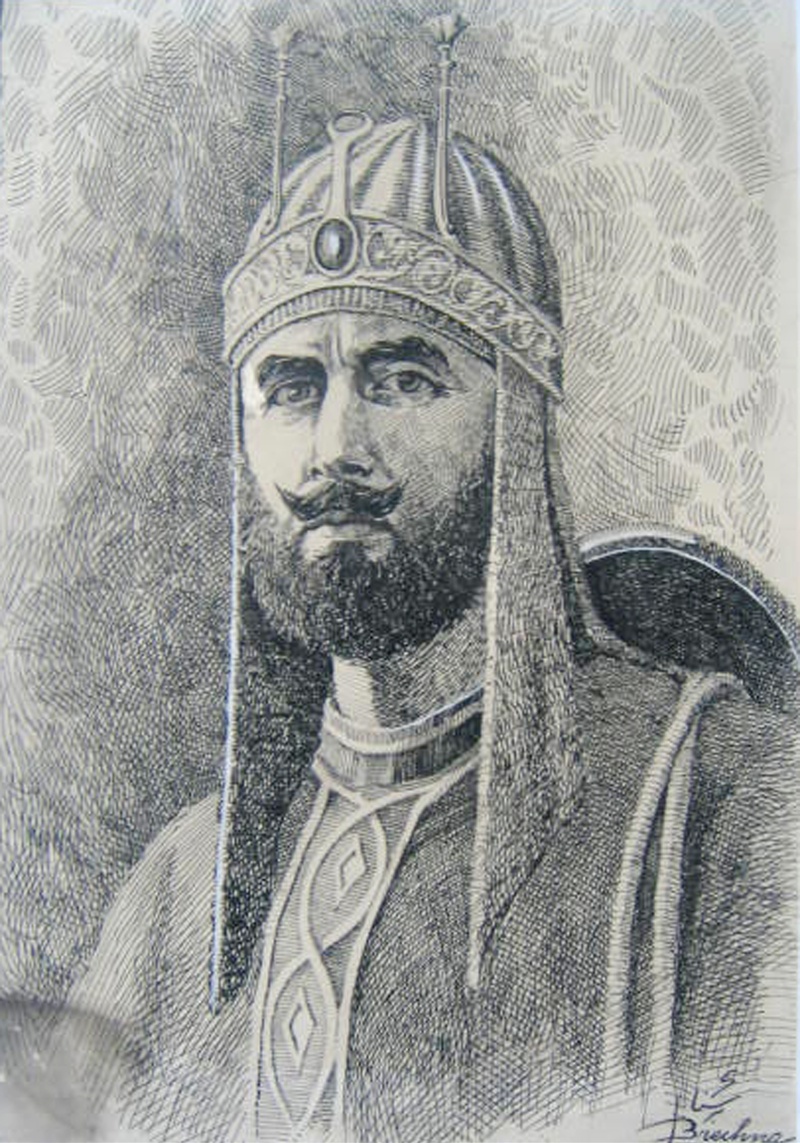
The medieval history of Bihar is commemorated by foreign invasions and dynasties that transformed the region. During medieval times, the Sur Dynasty was the most significant dynasty in Bihar. Sher Shah Suri (1486–1545) was the founder of the Suri Empire in India, with its capital in Sasaram in modern-day Bihar. He introduced the currency of the rupee and also built the historic Grand Trunk Road. The remains of a grand mausoleum built for him can still be seen in Sasaram, known as Sher Shah’s Maqbara.
Later, Mughal emperor Akbar expanded his empire by annexing Bengal and Bihar. The first Mughal emperor sworn in at Patna was Farrukhsiyar. As the Mughal Empire declined, the Nawabs of Bengal came to rule over Bihar.
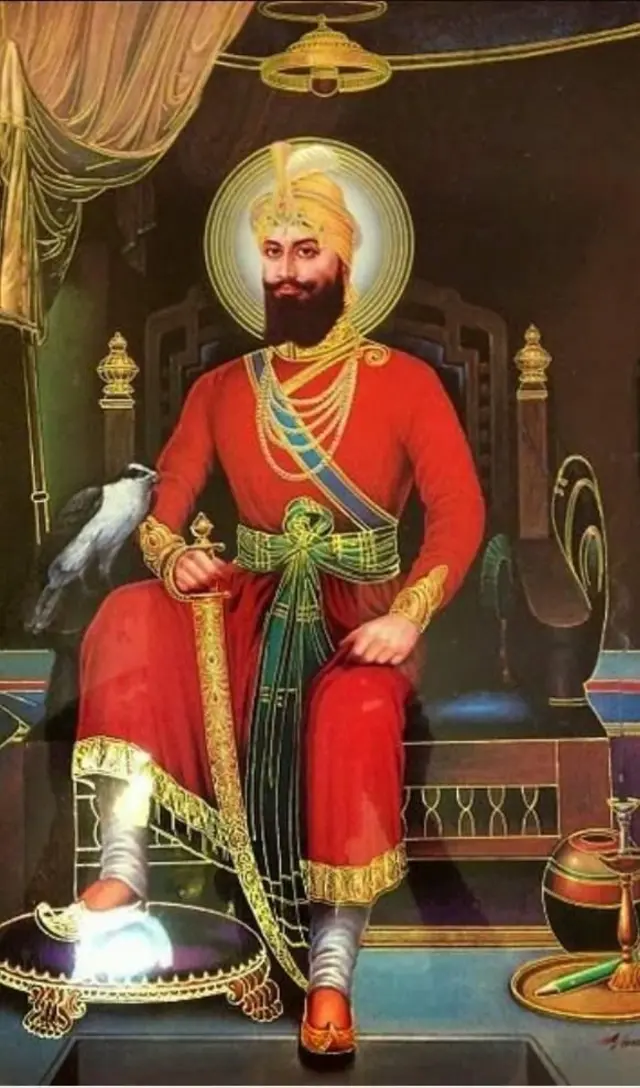
Bihar also has deep religious importance in Sikh history. Guru Nanak Dev Ji Maharaj visited Patna and stayed at Bhagat Jaitamal's house near Gaighat in 1509 CE. Later, Guru Tegh Bahadur Ji Maharaj came to Patna with his family in 1666. The 10th and last Guru of Sikhism, Guru Gobind Singh Ji Maharaj, was born at Patna Sahib in 1666.
Prince Azim-us-Shan, the grandson of Aurangzeb, was appointed as the governor of Pataliputra in 1703. He renamed Pataliputra as Azimabad in 1704.
Modern History of Bihar
British gained control after Battle of Buxar (1764). Bihar became separate province in 1912. Major reforms like Permanent Settlement and Golghar construction happened during British rule.
Revolt of 1857
The Bihar Revolt began on June 12th, 1857, at the 32nd Infantry Regiment’s headquarters at Deoghar (now in Jharkhand). Sergeant Dr Grant and Lieutenant Norman Leslie, two British officers, participated in this uprising. However, McDonald put an end to the rebellion.
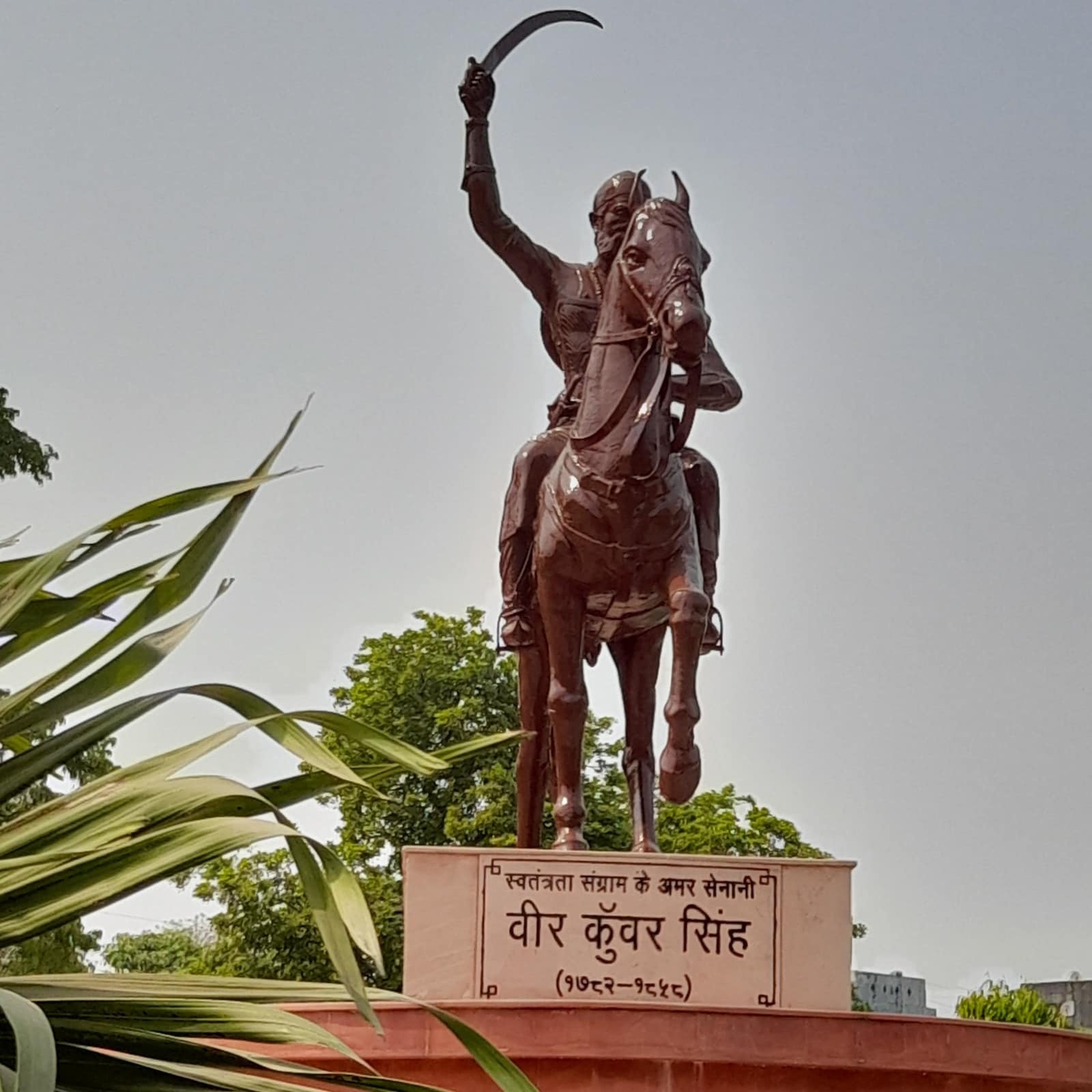
Under the leadership of bookseller Pir Ali, a mutiny was initiated in Patna on July 3rd, during which British opium trader Dr Lyell was killed. The most famous rebel, Babu Kunwar Singh of Jagdishpur, actively commanded a group of 4000 troops and won numerous fights.
Babu Kunwar Singh was nearly eighty and in failing health when he was called upon to take up arms. He gave a good fight and harried British forces for nearly a year and remained invincible until the end.
In his last battle, fought on 23 April 1858 near Jagdishpur, the troops under the control of the East India Company were completely defeated.
Champaran Satyagraha
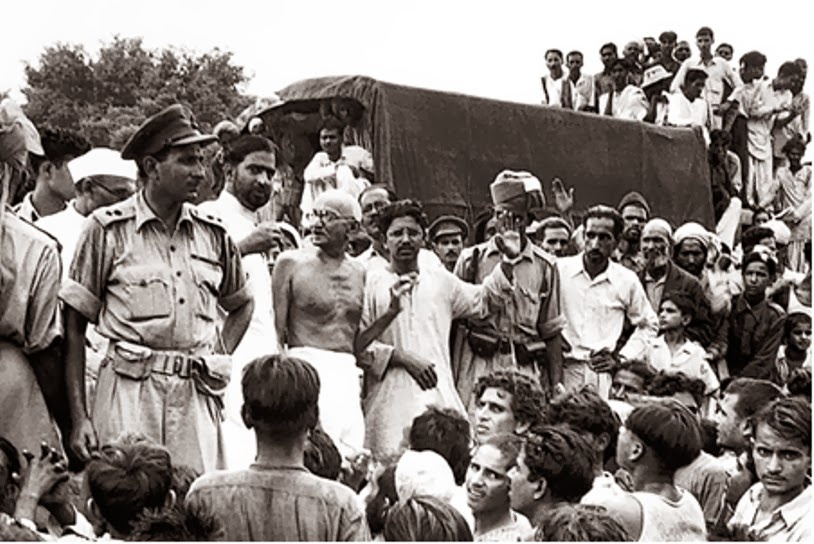
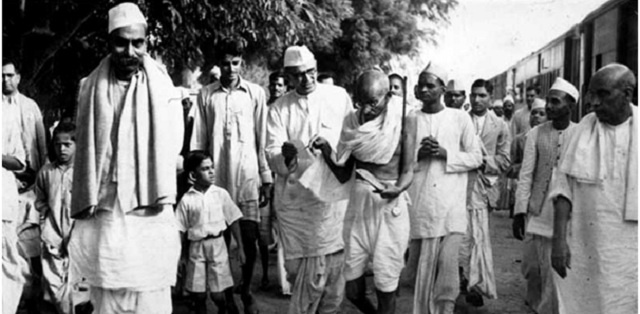
Rajkumar Shukla and Raam Lal Shah invited Mahatma Gandhi to look into the Tinkathia system, which required peasants to cultivate indigo on 3/20 of the total amount of land. It was Mahatma Gandhi’s first Satyagraha Movement and it began in 1917. It is also called the first Civil Disobedience Movement. Dr Rajendra Prasad, Brajkishore Prasad, Acharya Kriplani, Dr Anugrah Narayan Sinha, Mahadeo Desai, C. F. Andrews, H. S. Pollock, Raj Kishore Prasad, Ram Navami Prasad, Shambhu Sharan, and Dharnidhar Prasad all joined Gandhi’s satyagraha. The movement compelled the British government to establish the Champaran Committee to conduct an investigation into the atrocities. Gandhi served on the committee and convinced the authorities of the atrocities committed under the Tinkathia System, the need to abolish the Tinkathia system and pay the peasants 25% compensation.
Quit India Movement
The Quit India Movement was launched by Mahatma Gandhi on August 8th, 1942, which got support from all over India. The plan of action for the movement was drafted on July 31, 1942, by the Bihar Congress Committee, which was chaired by Dr. Rajendra Prasad. The national flag was unfurled everywhere but the British arrived in order to control the movement and to put an end to the movement. The District Magistrate of Patna W. G. Archer arrested Rajendra Prasad and he was sent to Bankipur jail. The advocate general Baldeva Sahay resigned from his office in protest to Govt. repression. Phulan Prasad Verma, Shrikrishna Sinha, Anugraha Narayan Sinha and some other leaders were also arrested. The students played a heroic role in this freedom movement.
On August 11, 1942, a band of students marched in order to hoist the national flag on the building of the Patna secretariat. Under the orders of the District Magistrate, the thirteen to fourteen rounds were fired in which seven students were killed and several were injured. The seven students martyrs were Umakant Sinha, Ramanand Singh, Jagatpati Kumar, Satish Prasad Jha, Devipada Choudhary, Rajendra Singh and Ram Govind Singh.
As a result of this incident, a widespread upheaval broke out spontaneously. There was a complete strike in Patna on August 12. The same evening a meeting was organised by Jagat Narayan Lal, in which it was decided to cripple the government machinery. To paralyse the administration, the agitators uprooted railways lines, damaged telegraphs wires and telephones, burnt police stations, seized post offices and other government buildings.
During the course of this movement, Jayaprakash Narayan escaped from Hazaribagh jail and formed the 'Azad Dasta' in the jungles of Nepal, which harassed the British through sabotage and guerrilla warfare. In some districts like Chapra and Bhagalpur, the agitators established parallel governments for some time.
Women held rallies, hoisted flags, and staged sit-ins, actively participating in the movement. Railway lines, telegraph and telephone lines and police stations across Bihar were targeted, paralyzing the administrative machinery. The powerful protest in Bihar shook British rule and paved the way for independence.
Bihar After Independence
After India attained independence from the British rule, Dr. Rajendra Prasad served as the first President of India, holding the office from January 26, 1950, until May 13, 1962. After independence, the foundation for development in Bihar was laid under the leadership of Dr. Srikrishna Singh as its first Chief Minister, including the abolition of zamindari and major infrastructure projects. During the state reorganization of 1956, parts of Purulia were transferred to West Bengal. In the 1970s, Bihar saw the call for 'Sampoorna Kranti' against the Congress led by Jayaprakash Narayan, which transformed Indian politics and led to the formation of the Janata Party government after the Emergency. On 15 November 2000, the southern part of Bihar was separated to form the state of Jharkhand, causing Bihar to lose most of its mineral resources and industrial areas.
In November 2005, the people of Bihar elected the government led by Sri Nitish Kumar. Under his visionary leadership and focus on 'Justice with development', Bihar has seen a paradigm shift in social sector reforms and infrastructure development. Key achievements during this period include improvement in law and order, Saat Nischay, Jeevika, Rreservation to women in PRIs, ULBs and public employment, Right to Public Service Act, Bihar Public Grievance Redressal System, Campaign against Child Marriage and Dowry System, Jal-Jeevan-Hariyali, Agriculture Road Map, Start up Policy, Mahila Rozgar Yojana and Mukhyamantri bicycle yojana.
Today, Bihar is one of the fastest growing states in India. The state's growth trajectory has often surpassed the national average, indicating robust economic momentum driven by public investment, infrastructure development and increased economic activity.